
From Screening to Coordinated Care: CaritaHub's Vision for Indonesia's Long-Term Elderly Care Journey
This article has not been translated yet, so it is shown in English.
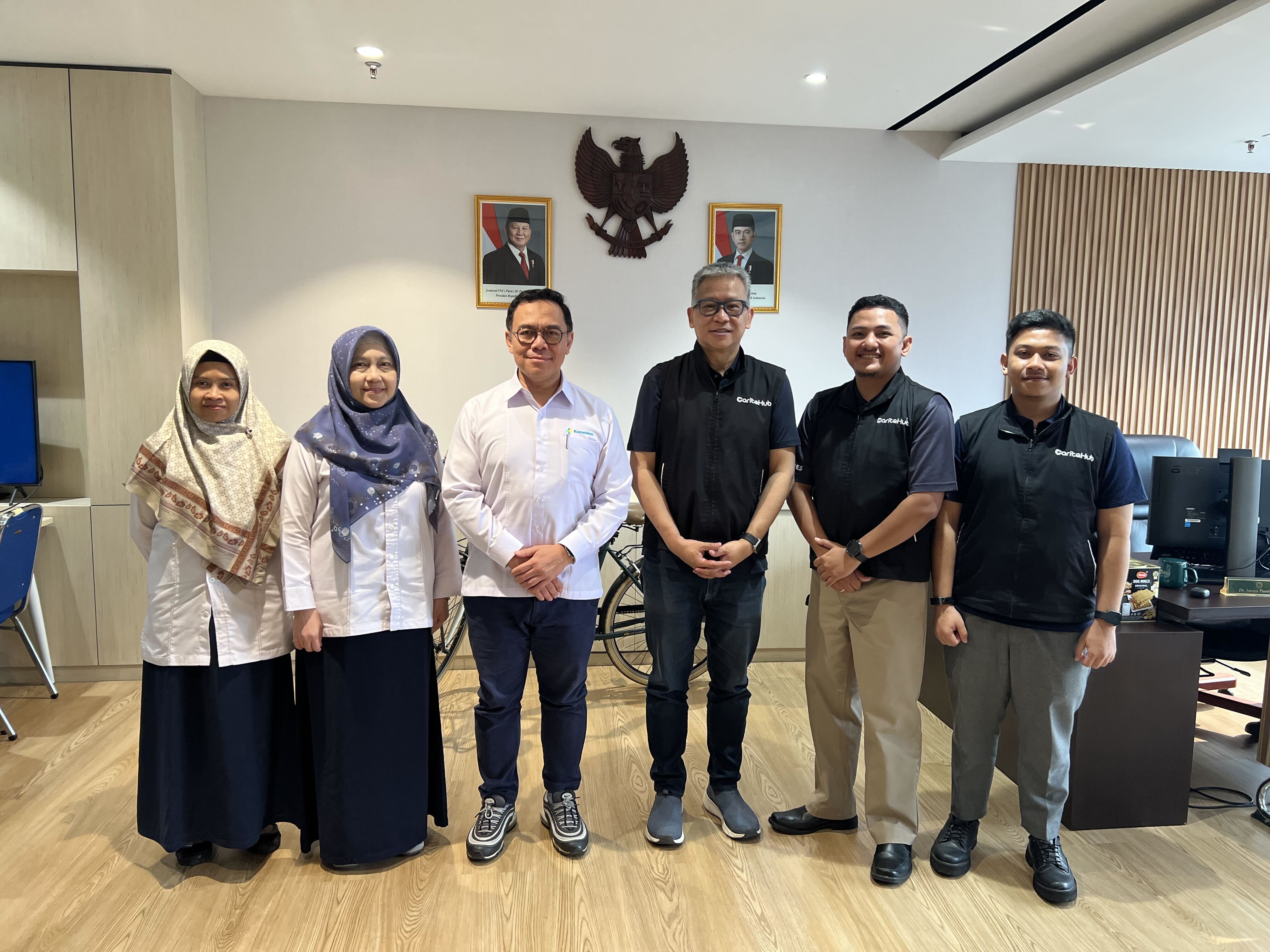
CaritaHub, represented by its Indonesia team, held a strategic audience with dr. Imran Pambudi, M.P.H., Director of Health Services for Vulnerable Groups under the Directorate General of Primary and Community Health at Kementerian Kesehatan Republik Indonesia (Kemenkes), at the Ministry of Health office in Jakarta on Wednesday, 9 September 2026. The discussion built on an earlier introductory meeting between the two organizations, moving from a general conversation about digitalizing elderly care toward a more focused question: what actually happens to an older person after they've been screened?
The Quiet Gap Between a Screening and a Care Plan
Indonesia has made real, visible progress in expanding health screening for its elderly population. Community health posts, known as Posyandu Lansia, along with broader national screening initiatives, now reach a growing number of older Indonesians every year. A senior visits a local health post, undergoes a basic health and dependency assessment, and receives a result.
But a screening result, on its own, is just information. The harder and far more consequential question is what happens next. Does a senior flagged as needing extra support actually receive a structured care plan? Does a health worker follow up? Does a family caregiver know what to do, and when? In many health systems — not just in Indonesia — this is where good intentions quietly stall. A positive screening result can sit in a register, technically "recorded," while the person behind that data point continues living without the coordinated support they were identified as needing.
This is the gap CaritaHub and Kemenkes's Directorate of Health Services for Vulnerable Groups spent much of the meeting discussing: not whether screening should happen — it already does, and admirably so — but how a screening result can reliably turn into a real, human-led care relationship that continues over time.
What "Long-Term Care" Really Means for a Senior at Home
In health policy circles, this kind of ongoing support is often referred to by its Indonesian shorthand, PJP — Perawatan Jangka Usia Lanjut or long-term care for older adults. Strip away the acronym, though, and the idea is a simple, human one: an older person who needs ongoing support shouldn't have to navigate that need alone, and neither should their family.
Long-term care, done well, isn't a single event. It's a relationship — between a senior, their family, a community health worker or kader, and the local Puskesmas care team — that continues through home visits, medication reminders, mobility support, and regular check-ins over months and years. It's the difference between a health system that identifies a need once, and one that stays present for that need over time.
For CaritaHub, this framing resonated deeply with why the company exists in the first place. Long before this meeting, CaritaHub's work in Singapore and its early pilots in Indonesia were built around a similar belief: that the hardest part of elderly care usually isn't the first assessment — it's everything that has to happen afterward, quietly and consistently, for months on end.
CaritaHub's Role: Coordination, Not Replacement
One theme came up repeatedly throughout the discussion, and it's one CaritaHub was careful to emphasize: technology's role in this picture is to coordinate, not to decide. A platform can help a Puskesmas team see which seniors need follow-up, help a family caregiver remember a medication schedule, or help a district health office generate the reports it needs — but the actual clinical judgment, the decision about what a senior needs and who should provide it, belongs to the people who have always made those decisions: doctors, nurses, and community health workers.
This distinction matters enormously in a healthcare context, and it's one reason CaritaHub's conversation with Kemenkes focused less on flashy AI capabilities and more on something more foundational: making sure information doesn't get lost between the moment a senior is screened and the moment someone actually visits their home. A shared, connected record — one that a Puskesmas team, a family, and a caregiver can all see — sounds like a small thing. In practice, it's often the missing piece that determines whether a care plan is followed through or quietly forgotten.
Built With Indonesia's Realities in Mind
CaritaHub's confidence in proposing this kind of collaboration doesn't come from theory alone. The company's platform has already been adapted for Indonesian-language use, for low-bandwidth and offline environments common outside major cities, and for the community structures — kader networks, Posyandu, and Puskesmas teams — that already do the hard work of reaching elderly Indonesians today.
Part of that confidence also comes from CaritaBakti, CaritaHub's ongoing initiative at Panti Werdha Jombang in East Java, where the company has spent real time learning how elderly care actually works on the ground in Indonesia — not just in a boardroom, but in daily interactions between caregivers and residents. That experience shaped much of what CaritaHub brought to the conversation with Kemenkes: a genuine understanding that technology adapted for Singapore's urban elderly care context cannot simply be transplanted into Indonesia's very different geography, language diversity, and community care traditions. It has to be rebuilt around them.
A Human-First Approach to Technology
If there was an underlying philosophy to the entire meeting, it was this: technology should make it easier for humans to care well, not attempt to stand in for their judgment. Throughout the discussion, CaritaHub was clear that any tool it builds for this kind of long-term care coordination is meant to support the people already doing this work — Puskesmas doctors, nurses, kader, and family caregivers — not to introduce a black box that makes decisions on their behalf.
This matters because trust, in a healthcare context, isn't something a company can simply assert. It has to be built through transparency: showing health workers why a case has been flagged for attention, making sure a family always knows that a concern they raise will reach an actual person, and ensuring that every part of the system remains something a Puskesmas team can see into and understand, rather than a sealed process they're asked to trust blindly. That principle guided much of what CaritaHub shared in the meeting, and it's one the company sees as non-negotiable in any future collaboration with Kemenkes.
Looking Ahead, Together
The meeting closed not with a finished agreement, but with something arguably more valuable at this stage: genuine alignment on the problem worth solving. Both CaritaHub and the Directorate of Health Services for Vulnerable Groups agreed that Indonesia's elderly population deserves a care system where a screening result reliably leads to a coordinated response — not because a family had the resources to chase it down themselves, but because the system was built to follow through by default.
For CaritaHub, this conversation represents something the team has been working toward for a long time: the chance to bring real, field-tested experience in elderly care coordination into direct dialogue with the people shaping national health policy for Indonesia's vulnerable populations. It's an opportunity the company takes seriously, and one it approaches with genuine optimism rather than a sales pitch — because the people this work is ultimately about are not abstractions. They are grandmothers living with a daughter who works full-time, elderly fathers managing chronic conditions alone, and community health workers already doing their best with limited hours in the day.
CaritaHub's message to Kemenkes, in this meeting and in the ones it hopes will follow, is a simple one: the company is ready to bring its platform, its field experience, and its team to the table — not to replace the people already caring for Indonesia's seniors, but to make sure their work reaches every person who needs it, consistently, and for as long as they need it.
As Indonesia continues building out its national approach to elderly and long-term care, conversations like this one — grounded, practical, and centered on the people the system is meant to serve — are exactly the kind CaritaHub hopes to keep having. Not as a vendor pitching a product, but as a partner genuinely invested in helping Indonesia get this right.
CaritaHub is an AI-powered senior care platform developed by Weeswares, supporting elderly care communities across Singapore and Indonesia. Learn more at www.caritahub.com.