
HLUIN 2026: How Indonesia's Silver Economy Push Aligns with CaritaHub's Elderly Care Technology
This article has not been translated yet, so it is shown in English.
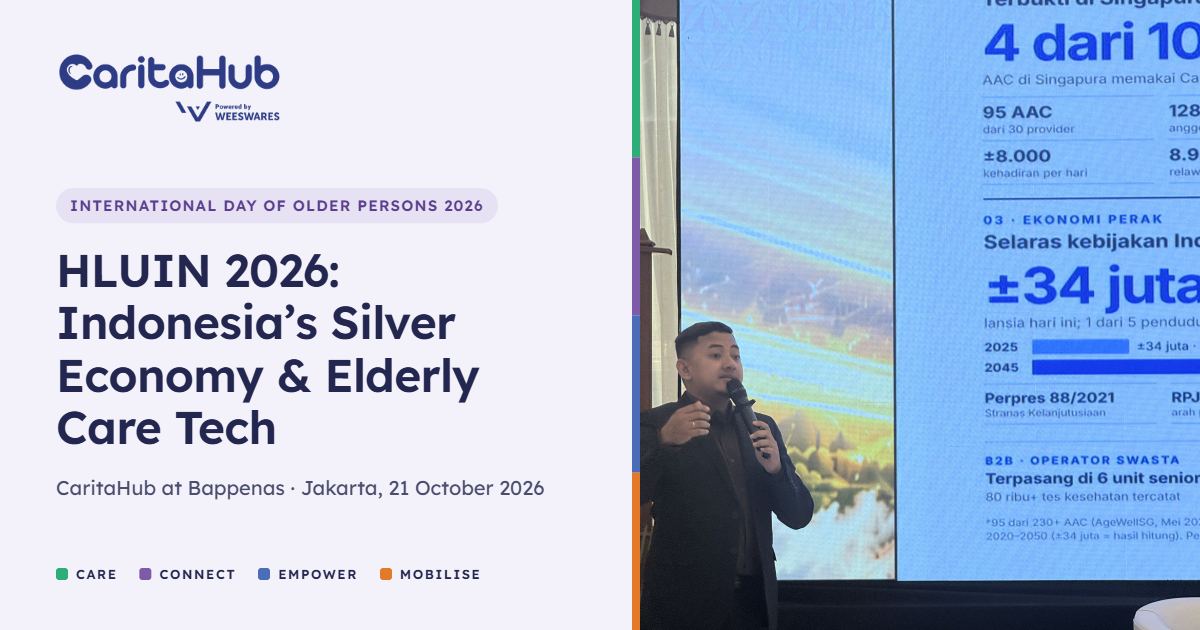
Indonesia is ageing fast, and the government is treating it as both a duty and an opportunity. At the International Day of Older Persons (Hari Lanjut Usia Internasional, HLUIN) 2026, held by the Ministry of National Development Planning (Bappenas) in Jakarta on Wednesday, 21 October 2026, policymakers, care providers and technology partners met to shape an elderly-friendly ecosystem. CaritaHub was there to share how technology can make that ecosystem work, from care homes to the family living room.
What happened at HLUIN 2026
The event took place at Bappenas's Saleh Afif Building with support from Australia's Department of Foreign Affairs and Trade (DFAT) through the INKLUSI programme. The agenda included:
- The launch of the ageing policy book Muda Menata, Tua Berdaya ("Plan While Young, Empowered When Old").
- The official kick-off of Indonesia's Silver Economy development.
- A High-Level Panel and thematic Focus Group Discussions, including one on building an accessible and sustainable care services ecosystem.
- An exhibition of innovation booths from the ageing sector.
Senior officials attending included Deputy Minister of Social Affairs Agus Jabo Priyono, Deputy Minister of National Development Planning Febrian Alphyanto Ruddyard, Bappenas Deputy Maliki and Australia's Deputy Ambassador to Indonesia Gita Kamath.
The numbers behind Indonesia's ageing agenda
Citing the 2025 Intercensal Population Survey (SUPAS), Deputy Minister Agus Jabo noted that older persons now make up 11.97% of Indonesia's population, projected to reach 20.31% by 2045. That means roughly one in five Indonesians will be elderly. BPS data from 2025 adds that 41.75% of older persons live in the poorest 40% of households, and 44.02% report health complaints.
In response, the Ministry of Social Affairs (Kemensos) set out three priorities: strengthen social protection for vulnerable elders, develop integrated elderly services, and promote empowerment through the silver economy. He stressed that silver economy success should be measured by older persons' welfare, independence and dignity, not just industry growth. Senior living and assistive technology were named as two strategic sectors.
Home care provider Insan Medika, also in attendance, highlighted the rising need for long-term care and professional caregivers, a reminder that elderly care is about daily support as much as medical treatment.
CaritaHub's four pillars, aligned with the National Ageing Strategy
CaritaHub builds elderly care technology in Indonesia, designed around the National Strategy on Ageing (Strategi Nasional Kelanjutusiaan, Presidential Regulation 88/2021). Its roadmap rests on four pillars that map directly onto the priorities discussed at HLUIN 2026.
1. CARE: service operations. One platform for every care setting. Nursing homes and social care homes (panti werdha) manage resident records and reports to the Social Affairs Office (Dinsos). Senior living and nursing homes track medication, daily care and family updates. Day care centres run sessions, rehabilitation and care plans. Activity centres and senior clubs log activities, attendance and health checks. Home care teams handle caregiver schedules and visit reports. This answers Kemensos's call for integrated services linking social care, health and long-term care.
2. CONNECT: older persons and families. The ActivAge app, a family app and a smart photo frame keep elders connected to their families and care teams. This helps ease the care burden that families carry today and supports the psychosocial wellbeing the ministry emphasised.
3. EMPOWER: productive ageing. Through Teman Usaha, Pasar BKL (a marketplace linked to Bina Keluarga Lansia elderly family groups) and QRIS payments, older persons can stay economically active. This puts the silver economy into practice: elders as contributors, not only care recipients.
4. MOBILISE: volunteers and philanthropy. A volunteer management module, modelled on what works in Singapore, helps communities and donors support older persons in a structured way. It strengthens the community-based support, referrals and ongoing monitoring that HLUIN speakers called for.
Proven regionally, built for Indonesia
At HLUIN 2026, CaritaHub shared that 4 out of 10 Active Ageing Centres in Singapore use its platform. That experience is now being applied to Indonesia's context, from panti werdha reporting to QRIS-enabled community markets.
Moving from momentum to action
HLUIN 2026 made one thing clear: Indonesia's ageing transition needs collaboration across government, care providers, families and technology. CaritaHub is ready to partner with care homes, local governments and communities to build an elderly care ecosystem that protects the vulnerable and empowers those who can still contribute.
Interested in bringing CaritaHub to your care facility or community? Contact the CaritaHub team.