
International Day of Older Persons 2026: Longer Lives Should Mean Fuller Ones
This article has not been translated yet, so it is shown in English.
By 2050, the number of people aged 60 and over worldwide is projected to nearly double — from 1.2 billion today to 2.1 billion. That's not a distant forecast. It's a shift already under way, and it's why, every October 1st, the United Nations pauses the world's attention for one day to ask a simple but enormous question: what are we actually doing with all these extra years?
Today marks the 36th International Day of Older Persons. And this year's theme cuts straight to the point.
What Is International Day of Older Persons, and Why Does It Exist?
The United Nations General Assembly established October 1st as International Day of Older Persons back in 1990, followed a year later by the adoption of the UN Principles for Older Persons. The idea was straightforward: ageing populations were growing everywhere, and the world needed a fixed moment each year to look honestly at both the contributions older people make to society and the gaps society still leaves open for them.
Thirty-six years later, that question hasn't gotten simpler. It's gotten more urgent.
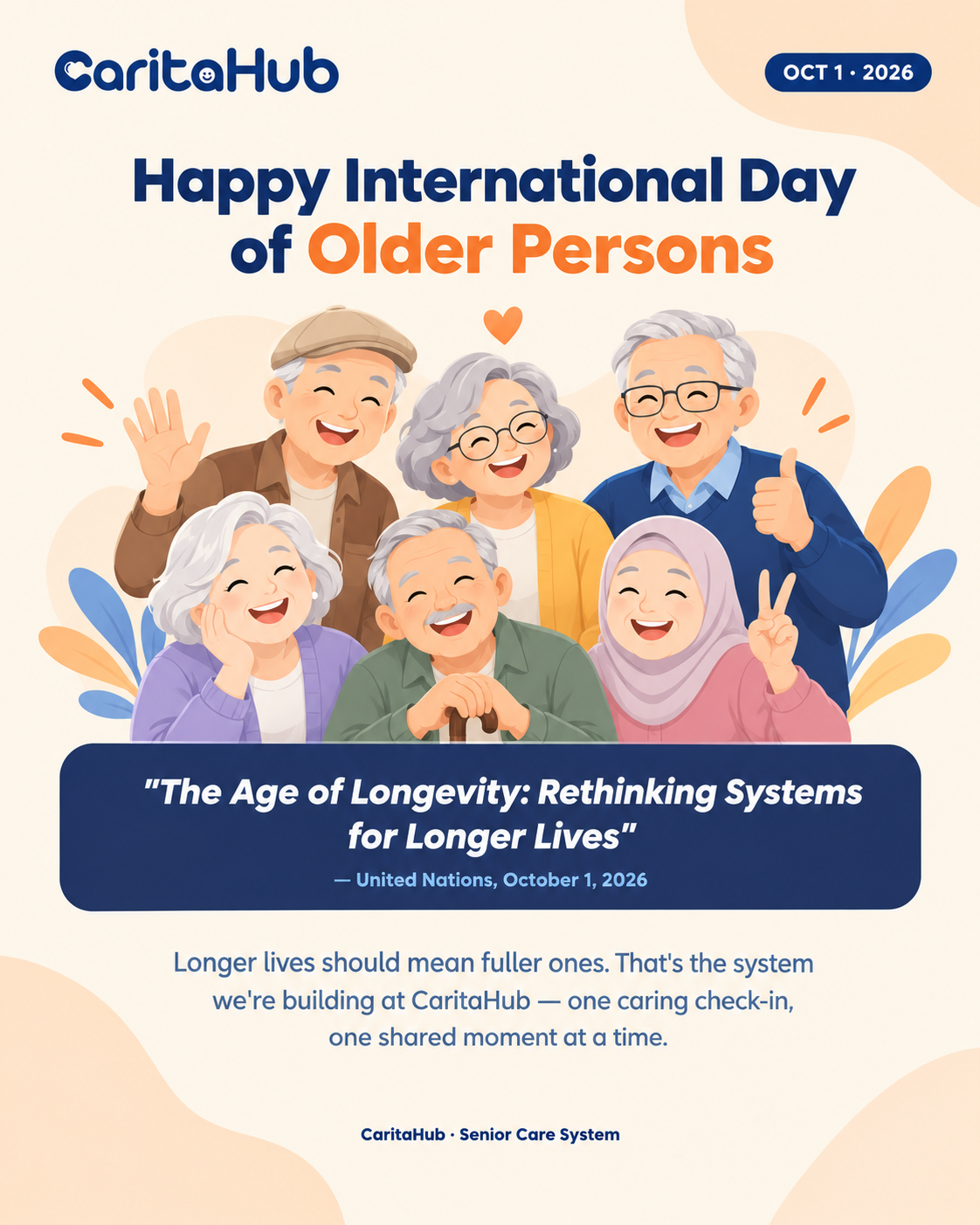
This Year's Theme: "The Age of Longevity: Rethinking Systems for Longer Lives"
As the UN Secretary-General put it in this year's official message: humanity is living longer than ever before, and that is genuinely one of the great achievements of our time — a sign of better health systems and stronger social protections in much of the world. But the same message adds an important caution: for too many people, growing older still means facing insecurity, being left behind, or encountering discrimination that undermines their dignity.
That tension is exactly what this year's theme is about. "The Age of Longevity" isn't a celebration slogan. It's a direct challenge to governments, health systems, employers, and families: the years have been added. Now what?
More Years, But Are They Good Years?
Here's the uncomfortable part most birthday-card versions of "ageing gracefully" skip over: living longer and living well are not the same achievement, and one doesn't automatically produce the other.
A person can gain fifteen extra years of life and spend a meaningful share of them managing a health system that wasn't built with them in mind — pension schemes designed for a shorter retirement, housing that assumes full mobility, workplaces with no path for someone who wants to keep contributing past a certain age, care systems that only notice a problem once it's already a crisis. None of that is really about individual seniors failing to "age well." It's about systems built for a world where fewer people lived this long, now straining to catch up with one where far more of us do.
This is precisely why the UN frames this year's theme around systems, not individuals. The Madrid International Plan of Action on Ageing — the cornerstone international framework since 2002 — and the UN Decade of Healthy Ageing (2021–2030), now at its midpoint, both point the same direction: health care, long-term care, social protection, work, and lifelong learning all need to be re-examined with longevity as the baseline assumption, not the exception.
What "Rethinking Systems" Actually Looks Like
It's easy to nod along to a phrase like "rethinking systems" and still have no idea what it means for an actual 78-year-old living alone, or for the adult daughter checking in on her father three times a week between work and her own kids. So here's what it tends to look like in practice:
It looks like a daily check-in that doesn't rely on someone remembering to call. It looks like a missed visit or a worrying health reading getting flagged to a real person within a day — not discovered a month later at a crisis point. It looks like families getting an honest, current picture of how their parent is actually doing, instead of a reassuring "yes, I'm fine" that may or may not be accurate. It looks like care coordination that connects a hospital discharge to a community centre to a home visit, instead of three disconnected systems that each only see a fragment of the story.
This is the exact gap CaritaHub was built to close. Across Singapore, Indonesia, and Vietnam, the platform exists for precisely this reason — not to replace the people who already show up for an older person, but to make sure nothing falls through the cracks between the moments they do. A system that prompts, while a person decides. That's rethinking systems, translated into something that actually runs in the field, every day.
What You Can Do Today
International Day of Older Persons isn't really built for grand policy statements from ordinary people — most of us aren't drafting national pension reform this afternoon. But the day still asks something real of each of us.
Call a parent or grandparent, not just to check a box, but to actually ask how they're doing — and listen past the first answer. If you work in health, policy, or technology, ask whether what you're building actually assumes people will live this long, or whether it was designed for a world that's already gone. And if you're an older person reading this yourself: the UN's message this year is, in part, for you too — ageing well shouldn't depend on luck, and raising that expectation out loud is itself a form of participation.
Humanity didn't stumble into living longer. It built its way here, through decades of better health care, sanitation, and social protection. Finishing the job — making sure those extra years are also good ones — is the work this day exists to name.